

| Le Petit Écho de la mode 20 avril 1924 |
 |
|
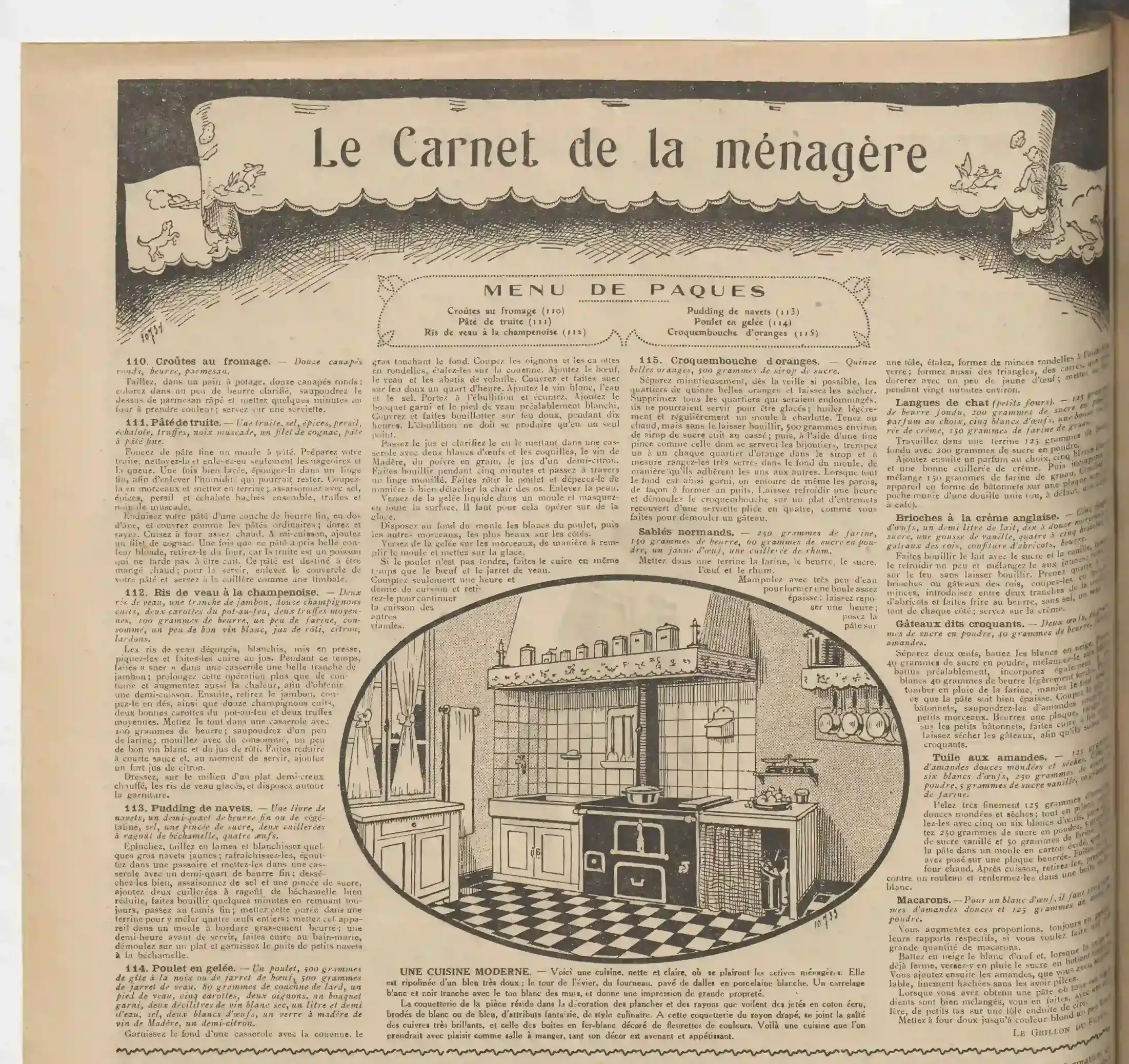
110. Cheese crusts. rounds, butter, parmesan. Cut twelve round canapes from a soup loaf; color in a little clarified butter, sprinkle the top with grated parmesan and put in the oven for a few minutes to brown; serve on a napkin. 111. Trout pâté. Line a pâté mold with thin dough. Prepare your trout, clean it and remove only the fins and tail. Once washed well, pat it dry in a fine cloth to remove any moisture that may remain. Cut it into pieces and put in a terrine; season with salt, spices, parsley and shallot chopped together, truffles and nutmeg. Coat your pâté with a layer of fine butter, like a donkey, and cover like ordinary pâtés; brown and stripe. Cook in a fairly hot oven. Once this pâté has taken on a nice golden color, remove it from the oven, because trout is a fish that does not take long to be cooked. This pâté is meant to be eaten hot; To serve it, remove the lid from your pâté and serve with a spoon like a timbale. 112. Veal sweetbreads Champagne style. The sweetbreads have been disgorged, blanched, put in a press, prick them and cook them in the juice. Meanwhile, “sweat” a nice slice of ham in a saucepan; extend this operation longer than usual and also increase the heat, in order to obtain half-cooking. Then remove the ham, cut it into cubes, as well as twelve cooked mushrooms, two good carrots from the stew and two medium truffles. Put everything in a saucepan with 100 grams of butter; sprinkle with a little. of flour; add some broth, a little good white wine and some roast juice. Reduce the sauce briefly and, when ready to serve, add strong lemon juice. Arrange the glazed sweetbreads in the middle of a heated semi-deep dish, and arrange the garnish around them. 113. Turnip pudding. Peel, cut into strips and blanch a few large yellow turnips; refresh them, drain in a colander and put them in a saucepan with half a quart of fine butter; dry them well, season with salt and a pinch of sugar, add two tablespoons of well-reduced béchamelle, boil for a few minutes, stirring constantly, pass through a fine sieve; put this puree in a terrine to mix in four whole eggs; put this mixture in a heavily buttered rimmed mold; half an hour before serving, cook in a bain-marie, turn out onto a dish and garnish the well with small béchamelle turnips. 114. Jellied chicken. Garnish the bottom of a pan with the rind, the fat touching the bottom. Cut the onions and carrots into slices, spread them over the rind. Add the beef, veal and poultry giblets. Cover and sweat over low heat for a quarter of an hour. Add the white wine, water and salt. Bring to the boil and skim. Add the bouquet garni and the previously blanched calf's trotter. Cover and boil over low heat for ten hours. Boiling should only occur at one point. Strain the juice and clarify it by putting it in a saucepan with two egg whites and the shells, Madeira wine, peppercorns, and the juice of half a lemon. Boil for five minutes and strain through a damp cloth. Roast the chicken and cut it up so that the flesh is separated from the bones. Remove the skin. Pour liquid jelly into a mold and cover the entire surface with it. This requires operating on ice. Arrange the chicken breasts at the bottom of the mold, then the other pieces, the nicest ones on the sides. Pour jelly over the pieces to fill the mold and place on ice. If the chicken is not tender, cook it at the same time as the beef and veal shank. Allow only an hour and a half of cooking time and remove it to continue cooking the other meats. 115. Orange croquembouche. Carefully separate the quarters of fifteen beautiful oranges the day before if possible and let them dry. Remove any damaged quarters; they cannot be used to be glazed; Lightly and regularly oil a charlotte mold. Keep warm, but without letting it boil, approximately 500 grams of boiled sugar syrup; then, using fine tongs like those used by jewelers, dip each orange quarter one by one in the syrup and as you go, place them very tightly in the bottom of the mold, so that they adhere to each other. When the entire bottom is thus lined, we surround the walls in the same way, so as to form a well. Leave to cool for an hour and unmold the croquembouche onto a dessert dish covered with a napkin folded in four, as you do to unmold a cake. Norman shortbread. Put the flour, butter, sugar, egg and rum in a bowl. Handle with very little water to form a fairly thick ball: let sit for an hour; place the dough on a baking sheet, spread, form thin rounds using a glass; also form triangles, squares, which you will brown with a little egg yolk; put in the oven for about twenty minutes. Cat's tongues (petits fours). Work 125 grams of melted butter with 200 grams of powdered sugar in a terrine. Then add a flavor of your choice, five egg whites and a good dollop of cream. Then add 150 grams of oatmeal flour to the mixture. Lay this stick-shaped device on a plate with a pocket fitted with a plain nozzle (or, failing that, a teaspoon). Custard buns. Boil the milk with the sugar and vanilla, let it cool a little and mix it with the yolks; put it back on the heat without letting it boil. Take four to five brioches or king cakes, cut them into thin slices, place apricot jam between two slices and fry in butter, without salt, on each side; serve on top of the cream. |
| retour-back 20 avril 1924 |