

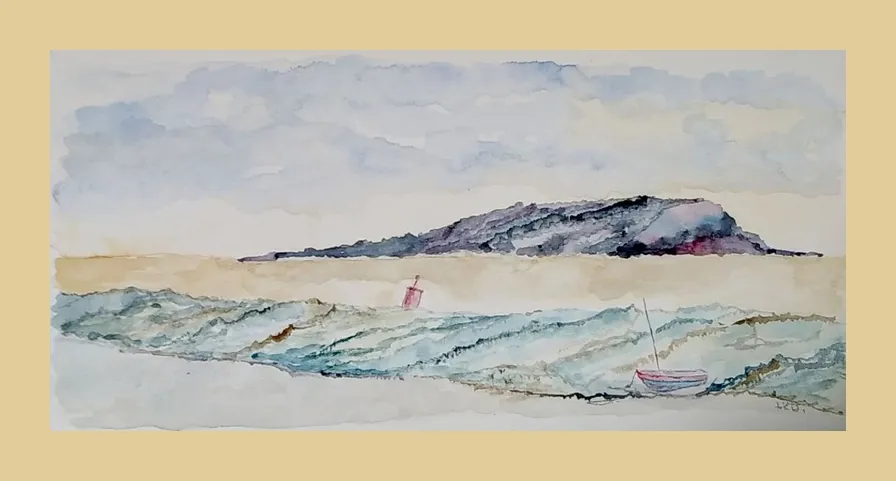
| L'Avenir d'Arcchon 23 novembre 1924 |
|
The judgment of "Ponpon" Mr. Poitevin, justice of the peace, did not have the heroism to accept all our means of defense in the trial that the Public Prosecutor brought against the brave "Ponpon" guilty of having sold barley sugars to spoiled children and our pretty gourmands on the beach. Not that those he used are bad, but they are much less consequential, they leave "honor intact" and thus, from an administrative point of view, all is for the best, he believes, in the best of all possible worlds. According to his sentence, there was simply a small oversight on the part of our administrators: they decreed the exile and ruin of the street vendors who lived from their trade on the beach. This is perfectly legitimate and natural, claims our judge. It is inapplicable only because the ukase was neither published nor posted and the prefect was not notified. As for Cledière and his boss Dacharry, what does it matter to them, thought Mr. Poitevin, why they are being let off the hook as soon as they are? We did not work to obtain the acquittal of a barley sugar merchant, who would have been sentenced to a fine of one franc, but to defend all small businesses against a measure that is not only irregular but also - this is obvious despite the assertions of the Petite Gironde and the judge himself - fundamentally unpopular, antidemocratic, abusive and illegal. The conclusions and the brilliant pleading of Me Austchitzki, one of the masters of the bar and one of our most prominent legal advisers, have abundantly demonstrated this. But there are cases where magistrates, in order to have their elbows free, consider the laws as rubber toys. Case law, made by judges wishing to free themselves from the legislative yoke, likes to teach that they "are not restrictive", that they "are not obligatory", that they "are not of public order" etc... even when the opposite clearly appears... That said, the judges do what they want. Therefore, relying on such examples, Mr. Poitevin considers that in certain cases the mayor can infringe on the freedom of trade and industry"; he arbitrarily extends these cases to that of poor Ponpon walking on the beach singing his song and selling his sweets (as if our small earner was thus doing the slightest harm to anyone); he assumes the police right and the territorial competence of the mayors to be unlimited; also unlimited is the right of the deputy drafter of the decree to replace the mayor without delegation or justification of absence; unlimited always the right of the judge to interpret a regulation without hearing the regulator and to confuse the words industry and commerce by asserting that selling barley sugars is becoming industrial; unlimited again, the right to admit presumptions in the absence of proof, that is to say to admit equally what one wants! And he can say all this with impunity since he says it only in his reasons. He knows that only the operative part opens the loser to the appeal in cassation and that "Ponpon" winning, despite everything, cannot appeal since the operative part does not reject any point of his conclusions. Was it not a question of avoiding the wrath of the Gods of Olympus and allowing them to issue a new decree of ostracism that would this time be regularized? It is often said. We do not believe that we will dare to go that far. First, small businesses would not let this happen and we would defend small businesses by all means. Then, those who obtained a satisfactory result from Mr. Poitevin cannot have any illusions about the legal value of this diploma. Caveant consuls! Albert de RICAUDY. La France du Sud-Ouest, having come to better feelings, published the following article on November 14: The Pompon affair. or the judgment acquitting the sympathetic Pompon. "South-West France", always concerned with the interests of the humble and the workers, applauds without reserve this measure of equity and social justice and hopes that in the future the Arcachon municipality will grant commercial freedom to all the citizens of our city, especially to the low-income earners and street traders whose cause Ponpon valiantly defended.
|
| Retour - Back 23 novembre 1924 |