Nouvelles des ports

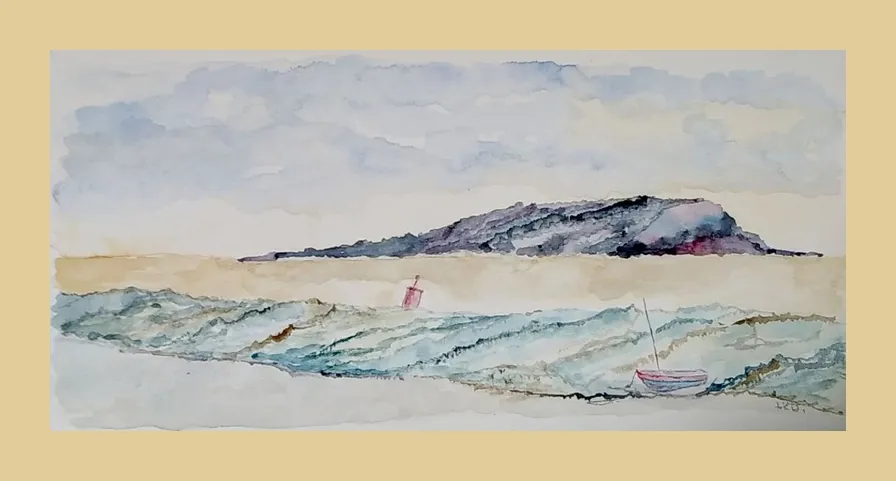
aquarelle marine - marine watercolor

Rafiots et compagnies

aquarelle marine cargo au mouillage - marine watercolor cargo ship at anchor

Nouvelles des escales

aquarelle marine - marine watercolor


L'Œuvre 11 novembre 1924


Z LOeuvre 1924 11 11 Large corporations are not private companies

Why, says a man who has ideas and who likes to see them realized, why is the rule of the age limit not applied to the directors of joint-stock companies?
For the very simple reason, someone replies, that a joint-stock company is a private enterprise, and that the State already has enough work with its own affairs without interfering in those of others.

Error: large companies are not private enterprises. They are not so first of all by the number of their shareholders; nor are they so by their object, which is of collective interest. The intervention of the State is therefore not only legitimate, but necessary. Generals are retired when they reach sixty-five years of age, even if they are not yet weakened; but we leave at the head of a railway company an octogenarian, or even a nonagenarian, who seems to have no other pretext for existence than to collect and receive attendance fees. Presence is the right word, because they are no longer capable of anything else. But what a cumbersome presence! What an obstacle to all progress, to all reforms, a tightly packed pack of old men blocking the road! It is not that they always do it on purpose; but it is enough for them to be there a little, very little, to prevent everything. They are old, that is all, and, consciously or not, they ask only one thing, that nothing moves so as not to disturb their end. A sorry state of affairs, when it is a question of animating a great enterprise which, by definition, must be highly enterprising. And we are at a time when the recovery of our country demands that all our forces be used. We no longer have enough young men to disdain their assistance and hand over the management of our affairs to a small group of timid, numb and fiercely reactionary old men.

Why do you say "small group"?
Because it is always the same people who come back, like the extras in the small provincial theatres. We realised this the other week, when the railway company councils entered into open conflict with the government over the reinstatement of railway workers. The very fact that one can seriously hold such a proposition is already an enormity, but when one looked with a little attention at the faces of the men who form these councils, one discovered not only that they are fossils, and that, if they are still capable of representing something, it is the most retrograde and comical gerontocracy; one also realised that they are a kind of token-operated apparatus. Certain administrators, unknown to the public, but all-powerful when it comes to resisting or abstaining, belong to ten, fifteen, twenty boards of directors, which translates into hundreds of thousands of francs of income, in the form of tokens. It costs a lot, the spokes in the wheels!

"Staples in the wheels because they do nothing?

Yes! They are also, on occasion, capable of doing wrong. We cite "directors" who do not own shares in the company they manage, and, in many general meetings, we witness this paradoxical spectacle of directors who have no interest in the business they administer, ousting or even expelling such shareholders who own a quarter of the capital. This alone would justify a revision of the law. But the most important thing, without a doubt, would be to regulate the recruitment and services of directors, to ensure maximum return on the activity of industrial and commercial companies.
During the war, we saw soldiers, who bore the greatest names in France, serving as orderlies or drivers of supply trucks. Because one of their ancestors had won a battle, even a famous one, no one would have thought of entrusting them with the command of an army. And no one would have thought of choosing an old retired civil servant from the registration department to put him in charge of the strategic operations. We are currently engaged in an economic war as difficult, as tough as the other. To conduct it successfully, the same principles of common sense, the same rules apply. A board of directors is neither a club for aristocrats nor an asylum for invalids. We will not win the decisive battles if our troops, whatever their ardor and their value, are commanded by old men who doze around a green carpet.
It would be so natural and so easy to prevent by a well-made statute abuses and scandals as disastrous as they are burlesque. Everyone in his place, that is to say here, place for the young. It is in the public interest.

Gustave Téry


Retour - Back 11 novembre 1924